Alternatives to care homes: what options are available in Portugal?
Gradiente de imagem de fundo
A care home is not the only option for living well after 65. For people who remain independent, there are different alternatives: staying at home, using support services, attending a day centre or choosing an independent senior living solution with services.
The choice depends less on age and more on the level of independence, the characteristics of the current home, the support required and, above all, how each person wants to live in the years ahead.
Why look for alternatives to care homes?
Reaching 65, 70 or 80 does not automatically mean needing permanent assistance. Some people need support with everyday life, while others continue to work, travel, drive, exercise, entertain friends and manage their lives completely independently.
For this reason, looking for a housing solution for older people should not begin with age alone. The first question should be different: what kind of home, services and support do I need to continue living the way I want?
In some cases, the home someone has lived in for decades continues to meet their needs perfectly. In others, it may start to feel too large, have stairs, require constant maintenance or be far from services, shops, transport and activities.
There may also be no physical difficulty at all. The motivation to move may simply be a desire to have fewer worries, feel more secure or live in a setting where it is easier to meet people and maintain an active social life.
It is precisely because situations differ so much that different models also exist.
What alternatives to care homes are available in Portugal?
Between staying in the home you have always lived in and moving to a care home, there are several possibilities. Some allow you to remain in your current home; others offer a new way of living independently, but with services and support close at hand.
Continuing to live at home
For many people, the first alternative is also the simplest: staying in their own home.
When the home remains suitable and the person is independent enough to manage day-to-day life, there may be no reason to move. Some adaptations can make the home more comfortable and safer over time.
Improving lighting, removing obstacles, replacing a bath with a walk-in shower, installing handrails or using safety equipment are examples of changes that can make everyday life easier.
It is also possible to arrange cleaning, maintenance, meal delivery or other support services individually.
However, it is important to make a realistic assessment. A home that worked very well for decades may begin to demand too much time, effort or money. Property maintenance, travel, stairs and distance from services should all form part of the decision.
When someone wants to continue living at home but begins to need support with certain tasks, the Home Support Service (Serviço de Apoio Domiciliário, SAD) is one of the options available in Portugal.
Portuguese Social Security defines SAD as a service provided in the home to people and families who, due to illness, disability or another limitation, are temporarily or permanently unable to meet certain basic needs or carry out activities of daily living.
Depending on the provider and the individual situation, the services may include different types of support.
The main feature of this model is simple: the person does not move home. Services are delivered to their residence, with the aim of helping them remain in their familiar environment for longer.
Attending a Day Centre
A Day Centre is another option that allows people to continue living in their own home.
According to Portuguese Social Security, it is a service that provides a range of support designed to help people remain in their usual living environment, while promoting independence and helping to prevent situations of dependency.
Depending on the institution, it may provide meals, activities, social interaction and other services.
It is important to distinguish this solution from moving home: people who attend a Day Centre continue to live in their usual residence and use the centre during specific periods.
Choosing independent senior housing with services
There is also a less familiar alternative in Portugal: independent senior housing with services, commonly known internationally as Senior Independent Living.
In this model, the person moves into a private home, usually an apartment, designed to support independent living. At the same time, they gain access to services, security and communal spaces that make everyday life easier.
The aim is not to replace independence with assistance. Quite the opposite: it is to create an environment that helps people maintain their independence for longer.
Depending on the development, services may include maintenance, cleaning, concierge or security, alongside communal areas such as gardens, a gym, swimming pool, restaurant, café or activity rooms.
Each resident still organises their day according to their own preferences.
For some people, this model becomes an alternative to a care home precisely because the move happens while they are still independent, rather than only when a need for care arises.
Moving to a care home or ERPI
What is commonly referred to as a care home or home for older people generally corresponds, within the official Portuguese framework, to an Estrutura Residencial para Pessoas Idosas (ERPI), or Residential Structure for Older People.
Portuguese regulations define an ERPI as a collective residential establishment, either temporary or permanent, where social support activities are provided alongside care. Services include meals, personal hygiene, occupational activities, support with activities of daily living and nursing care.
A care home or ERPI should therefore not be presented as a negative option. For many people, it is exactly the right response to their circumstances.
What matters is understanding that an ERPI and an Independent Living solution meet different needs.
An independent person mainly looking for a home that is easier to manage, greater security and a sense of community may have very different needs from someone who requires regular assistance and ongoing care.
Care home, home support or independent senior living: what are the differences?
There is no single model that is suitable for everyone over 65.
This comparison helps explain the main differences:
Solution
Where you live
Level of independence
Type of support
May make sense when…
Staying at home
Current home
High
Services arranged individually, if required
The home remains suitable and day-to-day life can be managed independently
Home Support Service
Current home
Variable
Support provided at home
Support is needed with some activities, but the person wants to remain at home
Day Centre
Current home + day centre during the day
Variable
Services, activities and support during specific periods
The person wants to continue living at home while benefiting from support and social interaction
Senior Independent Living
Private apartment within a residential community
High
Integrated and optional services
The person remains independent but wants to simplify home management and have services and community nearby
ERPI/care home
Residential setting
Variable
Accommodation with support and care
More permanent residential support and care is needed or preferred
What is Senior Independent Living?
Senior Independent Living, or independent senior housing, is a residential model designed for people who remain independent but want to live in a home better suited to this stage of life and have access to services that simplify everyday living.
It is important not to confuse independent living with a permanent care setting.
Independence is the starting point.
A private apartment
The person continues to have a home of their own.
A private apartment makes it possible to maintain routines, keep personal belongings, welcome family and friends, cook or simply close the door and spend time alone whenever desired.
The difference lies in the setting in which that home is located.
Services that simplify everyday life
Depending on the model chosen, maintenance, security, cleaning and other services no longer need to be arranged individually.
This can mean less time spent dealing with household problems and greater predictability in everyday life.
Communal spaces and community
One of the features of these developments is the availability of shared spaces where residents can exercise, take part in activities, have a meal or simply talk.
Having a community nearby does not mean having a compulsory schedule.
For people who value independence, that distinction matters: social interaction is available, not imposed.
Independence remains the starting point
Independent Living is not a healthcare facility and does not assume that a person needs assistance to organise their life.
The aim is to provide a home and a range of services that allow people to retain freedom of choice, privacy and independence.
It is precisely this difference that makes the model particularly relevant for people who want to plan in advance how they will live, rather than waiting for a situation of need to determine the decision.
What options are available in Portugal for independent and active older people?
In Portugal, there are different residential solutions for older people, but they do not all meet the same needs. Some are more focused on people who need regular support, care or day-to-day assistance. Others are designed for people who remain independent and are mainly looking for greater comfort, security, convenience and opportunities to socialise.
For this reason, more important than the label — care home, senior residence, retirement home or senior living — is understanding how each solution works and who it is intended for.
It is in this second category that Club65 fits.
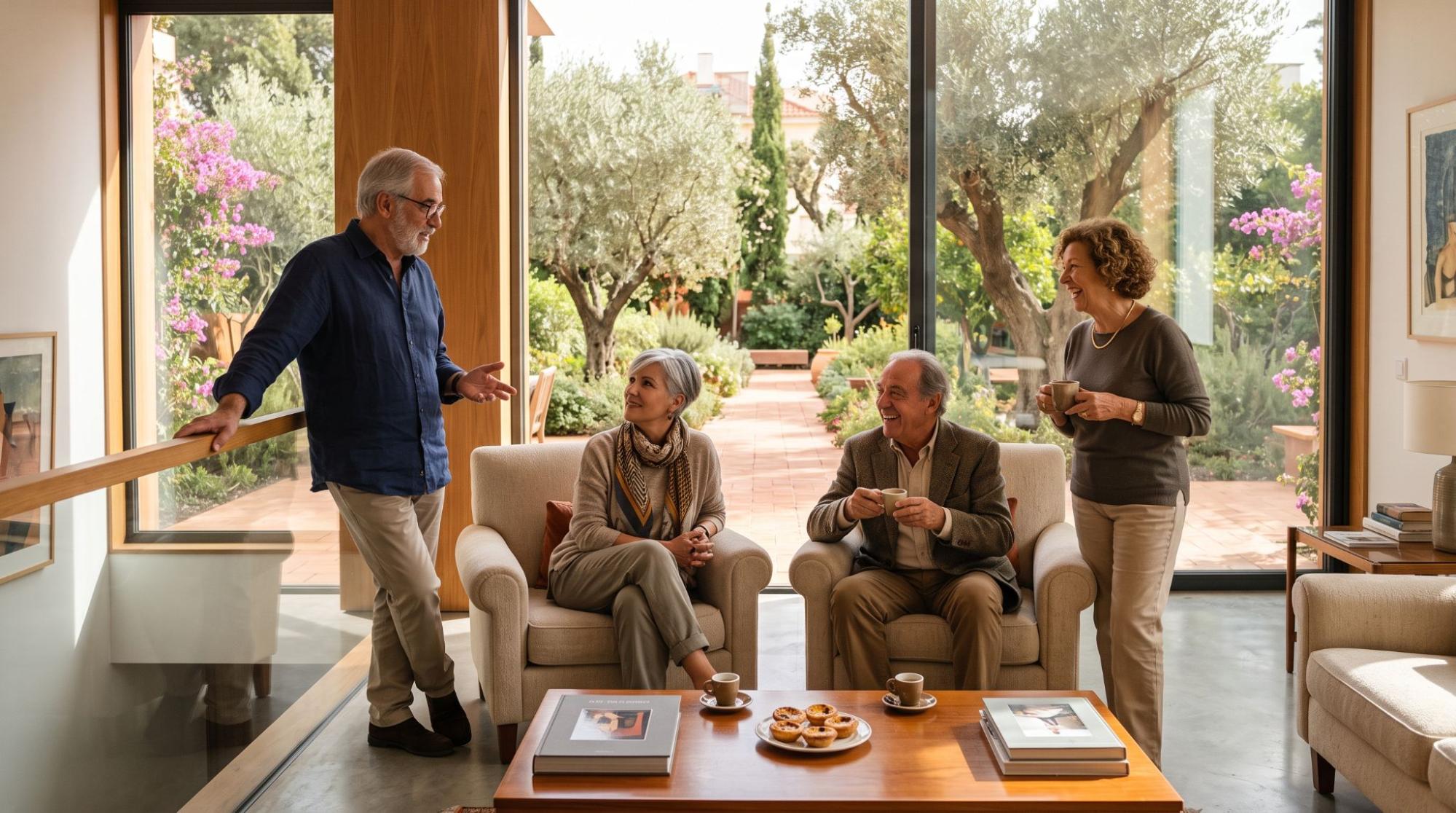
Club65 is a Senior Independent Living developmentdesigned for people over 65 who remain independent. The concept is based on private apartments, services that make everyday life easier, communal spaces and community living. It is not a healthcare facility or a permanent care setting.
The concept is based on providing an active and independent lifestyle that combines freedom, comfort, security and community.
Why might an independent person want to move home?
Moving home after 65 does not necessarily mean losing independence.
It can, in fact, be a way of protecting it.
Having a home that is easier to maintain
A large home can be comfortable, but it also requires time, maintenance, repairs and ongoing costs.
Choosing a more practical home can free up time and reduce everyday worries.
Living in a home prepared for the future
Accessibility, step-free design, lifts, suitable bathrooms and safety systems may seem unimportant until they are needed.
Thinking about these features in advance can help avoid decisions made under pressure later on.
Having services close at hand
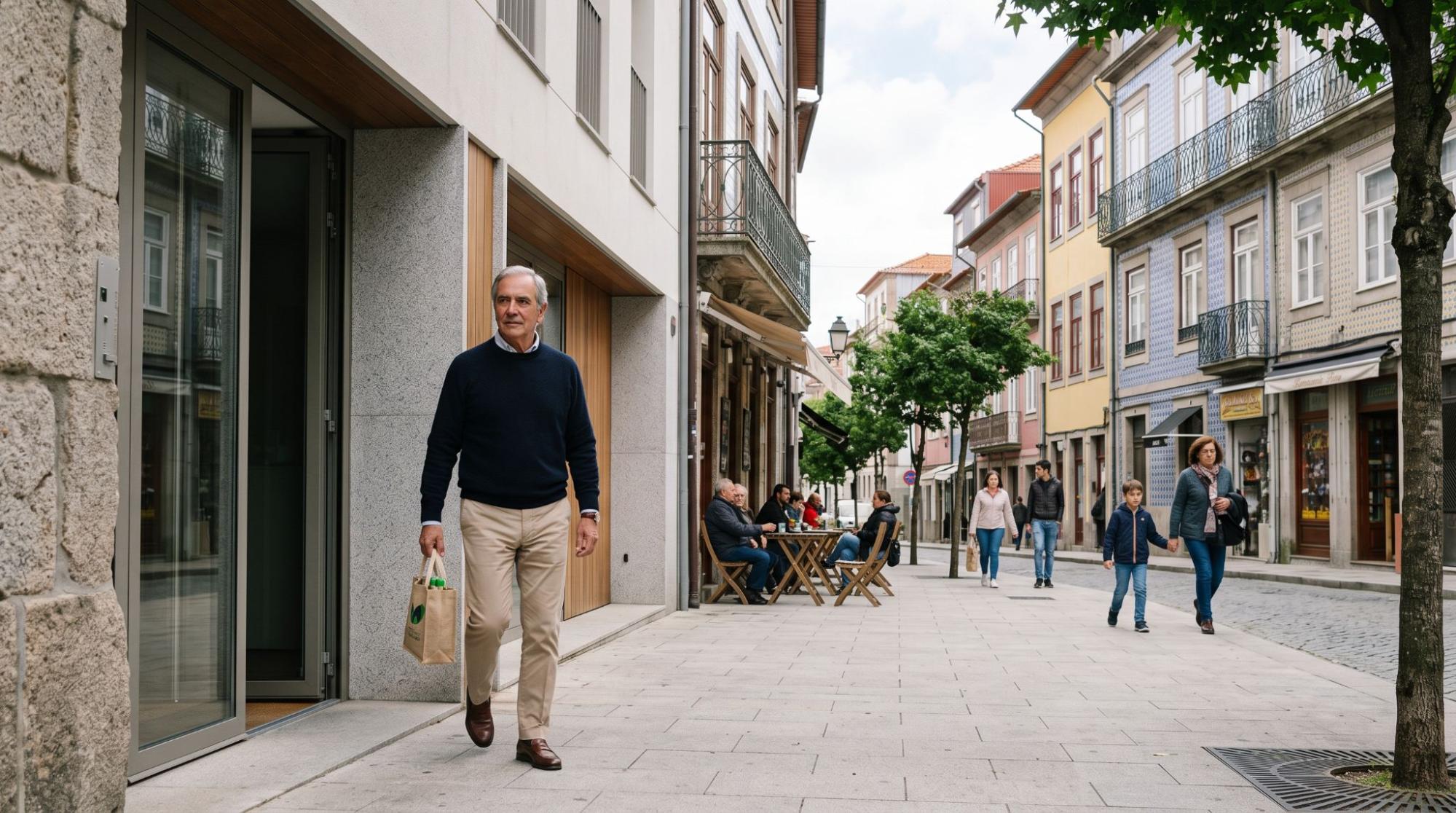
Pharmacies, shops, restaurants, public transport, green spaces, cultural amenities and healthcare all help people maintain their independence.
That is why the location of a senior housing solution deserves as much attention as the apartment itself.
Feeling more secure
Living independently does not mean having to deal with everything alone.
Having support available in an emergency, maintenance taken care of or someone to turn to when a problem arises can provide greater peace of mind without compromising independence.
More opportunities to socialise without losing privacy
The home should remain a private space.
But having people nearby can make it easier for a coffee, a conversation, an activity or a shared meal to happen spontaneously.
Social life does not need to be organised around compulsory activities. Often, what matters most is simply creating the conditions for people to meet naturally.
How do I know which solution is right for me?
There is no answer based on age alone.
Before choosing between staying at home, using home support, looking for a care home or choosing an independent housing solution, it is worth asking a few questions.
What support do I currently need?
Needing occasional help with cleaning or shopping is very different from needing daily support with activities of daily living.
The starting point should be a realistic assessment of current needs.
Is my current home still suitable?
Consider accessibility, maintenance, the size of the home, safety and ease of getting around.
Ideally, a home that suits you today should continue to work well if your needs change.
Do I want to continue living alone?
For some people, living alone means freedom.
For others, isolation gradually starts to become more difficult.
There is no right answer. What matters is understanding what you value.
How important are location and social life to me?
Can you walk to the places you use in everyday life?
Is public transport close by? Can you meet friends easily? Are there cultural activities, green spaces or shops in the neighbourhood?
Location has a direct impact on the ability to continue living independently.
How much does it really cost to maintain my current living arrangement?
The comparison should not be made only between a monthly fee and the cost of the home itself.
Also consider the cost of energy, water, internet, service charges, insurance, maintenance, cleaning, minor repairs, security, travel, activities and other services you use regularly.
Only then is it possible to compare different models more fairly.
What happens if my needs change?
This is one of the most important questions.
Ask which services can be added later, what support is available in an emergency and the level of need the solution is able to accommodate.
Planning ahead allows you to make a decision with greater freedom.
What should I compare before choosing a senior housing solution?
Before deciding, try to obtain clear information about:
required level of independence;
type of accommodation and level of privacy;
accessibility;
services included;
optional services;
support available during the day and at night;
response in emergency situations;
location and transport;
proximity to shops, healthcare and services;
communal areas;
opportunities for activities and social interaction;
monthly fee and additional costs;
conditions for moving in, staying and leaving;
the possibility of adapting services if needs change.
Whenever possible, visit the property in person and read the contractual terms before making a decision.
Frequently asked questions about alternatives to care homes
What is the difference between a care home and a senior residence?
The term “senior residence” can be used to describe different models. An ERPI is a residential service providing regulated social support and care in Portugal. A Senior Independent Living solution, by contrast, is primarily intended for independent people who live in a private apartment with access to services and communal spaces. Before comparing options, always check how each model works.
Is Senior Independent Living the same as a care home?
No. Senior Independent Living starts from the resident’s independence and is organised around independent housing, services and community. An ERPI is a residential setting that includes social support and care suited to residents’ needs.
What alternatives are available for an independent older person?
An independent person can remain in their own home, move to a smaller or more suitable property, use private services that make everyday life easier or choose an independent senior housing solution. The decision should take into account the home, location, security, social life, costs and future needs.
Is it possible to stay at home and receive support?
Yes. In addition to arranging different services individually, Portugal has the Home Support Service (Serviço de Apoio Domiciliário), which provides individualised care at home when certain needs or activities of daily living can no longer be managed independently.
When might it make sense to move to senior housing?
There is no need to wait for a loss of independence. Some people choose to move earlier because they want a more accessible home that is easier to maintain, greater security, integrated services or a community nearby. The decision depends on personal priorities and the preferred way of life.
When might it make sense to consider a care home?
An ERPI may be appropriate when a residential solution with more permanent support and care is needed or preferred. Portuguese regulations provide for social support services, assistance with activities of daily living and nursing care, among others.
Discover why more and more people are choosing to move house when they retire. Learn how to prepare for the move and enjoy this new phase of your life with greater freedom, security and quality of life.