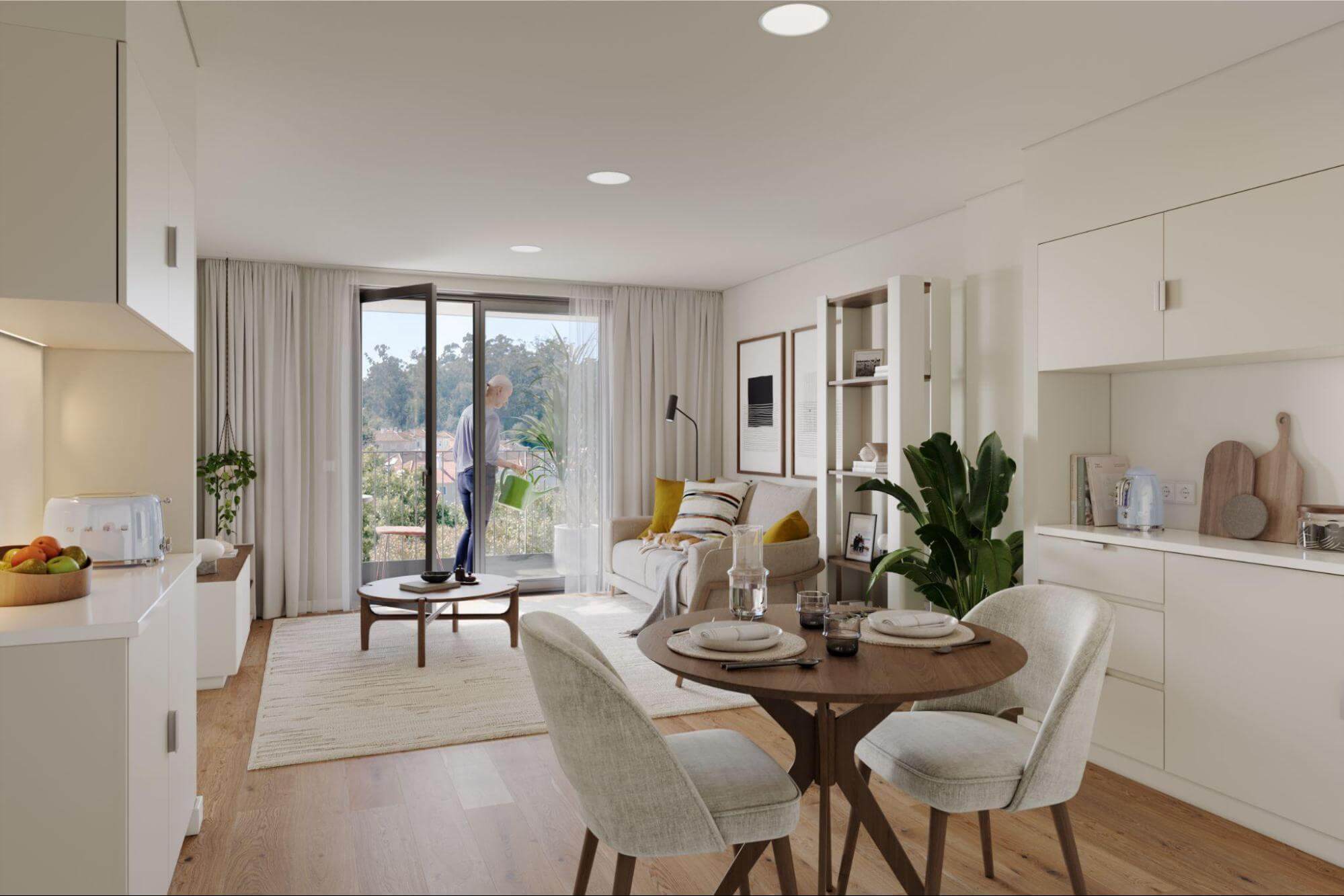
Moving house in retirement: how to decide and prepare for the move
Gradiente de imagem de fundo
Moving house in retirement can make sense when your current home no longer suits the way you want to live, requires too much maintenance, or is far from the services, people and activities you value.
The decision should not depend on age: it should come from comparing staying where you are, adapting your current home or choosing a solution better suited to your priorities.
In this guide, you will find the main criteria for making that decision, assessing the costs involved and organising the move in good time and without unnecessary complications.
When might moving house in retirement make sense?
Retirement can be a good time to take another look at the home you live in and ask whether it still meets your needs and priorities.
This does not mean you need to move. For some people, staying in the home they have always lived in remains the best option. For others, moving may make it possible to simplify daily life, reduce maintenance tasks, move closer to family or continue enjoying the city more easily.
It is worth considering a few practical points:
Space and Accessibility: Is your home still suitable for day-to-day life?
A home that worked very well for decades may become larger than you need or require time and effort you would rather spend on other things.
Think about how you actually use the rooms, outdoor space, stairs, cleaning, repairs and all the tasks needed to keep your home the way you like it.
Maintenance: How much time and money does it take to maintain your home?
In addition to regular expenses, a home involves maintenance, repairs, insurance and various services.
Looking at the overall cost helps you assess whether keeping your current home still makes sense or whether another option could offer greater predictability and fewer responsibilities.
Location: Does the location still work for you?
A home does not end at the front door.
Being close to shops, public transport, green spaces, services, culture, restaurants, family and friends can have a significant impact on how you organise your days.
In retirement, having more time can also make it more important to live somewhere where it is easy to make the most of it.
Stay, adapt or move: how do the options compare?
There is no single right solution for everyone. Before deciding to move, compare the main alternatives.
Option
May make sense when...
Points to consider
Stay in your current home
The home remains functional, comfortable and suited to your routine
Maintenance costs, accessibility, location and future management
Adapt your home
You like the location and the home, but there are aspects that could be improved
Required works, budget, duration of the work and possible outcome
Move house
You want greater simplicity, a different location or a home better suited to your current lifestyle
Moving costs, new monthly fee or other charges, location, space and services
Choose an apartment with services
You want to maintain an independent home while reducing some day-to-day tasks
Included services, optional services, terms, location and usage model
The comparison should start with what you value today, not only what worked in the past.
What should you consider before choosing a new home?
A move in retirement should be considered with the next few years in mind, not just the present moment.
Size and layout
More square metres do not always mean greater comfort.
A well-organised home, with a practical layout and enough space for what you actually use, can be easier to maintain and make daily life simpler.
Accessibility and comfort
Look at how easy it is to move around inside the home, access the building, whether there is a lift, how practical the bathroom and kitchen are, and how easily you can carry out everyday tasks.
A good home should make daily life easier.
Location
Ask yourself what you would like to have nearby.
This may include shops, public transport, gardens, restaurants, cultural venues, healthcare services or simply the neighbourhoods where you already enjoy spending time.
If being close to family matters, include that in your decision too.
Costs and predictability
Compare the overall cost of the different alternatives, not just one figure in isolation.
A higher monthly fee may, for example, include expenses you currently pay separately. Likewise, a home that appears less expensive may involve high maintenance or travel costs.
Always compare like with like.
Social life and daily routine
A move should not be assessed only in square metres.
Also think about how you would like to spend your days: having friends over, going for walks, eating at a restaurant, taking part in an activity, being close to family or simply having options when you feel like going out.
How much does it cost to move house in retirement?
The cost of moving is not limited to transporting your belongings. It is worth preparing a budget for the entire transition.
Type of cost
What it may include
Move
Transport, boxes, packing, disassembly and reassembly
New home
Initial costs associated with the chosen solution
Set-up
Minor adaptations, storage, lighting or items needed in the new space
Transition
Temporary overlap of expenses between the two homes
Current home
Costs associated with the decision to keep, sell or rent it out
Professional support
Organising the move, and financial, legal or property advice where needed
If you are considering using your assets or available income to support the new housing solution, it is worth looking separately at how to finance the move and comparing different scenarios before making a decision.
How to organise a house move after 65
Starting early allows you to make decisions more calmly and avoids concentrating too many tasks in the final weeks.
1. Set a date and work backwards
Create a simple timeline with the main stages: choosing the new home, sorting your belongings, booking the removal service, preparing documents, packing and settling in.
You do not need to sort everything out at once.
2. Get to know the new space well
Before deciding what to take, check the dimensions of the rooms, storage areas and features of the new home.
If possible, draw up a simple floor plan and decide in advance where the main furniture will go.
3. Decide what you will take
Sort your belongings into categories: take, give away, sell, donate or decide later.
Start with the areas that carry less emotional weight. Old documents or a storage room may be easier to sort through than photographs and objects with personal history.
4. Prepare a budget
Ask for quotes for the services you need and include a contingency for small expenses that only arise during the move.
Having an overall view helps avoid rushed decisions.
5. Deal with the administrative tasks
Make a list of the organisations and services where you will need to update your address and check in advance what happens to the contracts associated with your current home.
Keep important documents somewhere separate from the moving boxes.
6. Prepare for the first few days
Set aside what you will need immediately: clothes, regular medication, documents, chargers, personal items and a few belongings that make the new home feel like yours from day one.
7. Give your new routine time
A home is not truly organised on moving day.
Set up the essentials first and allow yourself to adjust the space as you start using it. Some decisions become much clearer after living in the new home for a few weeks.
What if you would prefer to live in an independent apartment with services?
One option for independent people aged 65+ is Independent Living, or independent housing with services.
In this Senior Living model, each person lives in their own apartment and retains their privacy and independence, while having access to services that simplify certain day-to-day tasks and shared spaces when they wish to use them.
Club65 follows this concept and is designed for people who remain independent and want to continue living that way, while valuing a home designed for this stage of life, access to services and the possibility of having a community nearby.
Checklist for moving house in retirement
Before going ahead, check whether you have already considered the main points:
I have defined what I am looking for in my next home.
I have compared staying, adapting and moving.
I have analysed the current cost of my home.
I have set a budget for the new solution.
I have chosen the features and type of home I need.
I have assessed the location and nearby services.
I have checked the accessibility of the new home.
I have decided what I want to do with my current home.
I have made an initial selection of the belongings I want to take.
I have requested quotes for the services I need.
I have created a timeline for the move.
I have allowed time to settle in without rushing.
Moving house can be a proactive decision
Moving house in retirement does not have to happen because a problem has arisen. It can be a planned decision to align your home with what you value today: greater simplicity, a different location, less maintenance, greater predictability or more options in daily life.
Start by comparing the home you have with the life you want to lead. From there, it becomes easier to see whether staying, adapting or moving makes sense.
If you are considering an independent apartment with services, you can speak to the Club65 teamto learn about the locations, apartment types, services and terms.
Frequently asked questions about moving house in retirement
Is there a right age to move house?
No. The decision should depend on your priorities, how well your current home suits you and how you want to live. Some people move shortly after retirement; others do so many years later. The most important thing is to be able to decide in good time and compare alternatives.
Is it better to move house before or after retirement?
It depends on your situation. Preparing the decision in advance allows you to research homes, locations, costs and different models without pressure. The move itself can then take place at the time that best suits your life and your plans.
Do I have to move to a smaller home?
No. A smaller home can be easier to maintain, but the ideal size depends on your routine. If you regularly have family to stay, need a home office or value particular spaces, these factors should influence your choice.
What can I do with my current home?
You may decide to keep it, sell it or rent it out, among other possibilities. Each option has different financial, tax and property implications, so you should consider your individual circumstances and, where necessary, seek specialist advice.
How much time should I allow to prepare for a move?
The more belongings and decisions involved, the more useful it is to start early. Rather than setting a universal timeframe, create stages and spread the tasks over several weeks or months. The aim is to avoid having to make every decision close to moving day.
What should I look for in a home to live in after 65?
Look for a home that suits your routine and plans: location, accessibility, size, maintenance, costs, transport, nearby services and the ability to maintain your social life.
Rather than looking for a ‘home for your age’, the most important thing is to find a home that makes it easier to continue living the life you want.